


Building a loyal customer base isn't about one single tactic. It comes down to a consistent focus on three core areas: crafting exceptional experiences, delivering proactive support, and nurturing a genuine community. This approach moves you away from thinking about one-off sales and toward building real, trust-based relationships that fuel long-term growth.
Why Customer Loyalty Is Your Greatest Asset

Here’s the thing: simple customer satisfaction isn't enough anymore. A satisfied customer might be happy with their purchase today, but a loyal customer feels a real connection to your brand. They’ll stick with you even if a competitor dangles a slightly lower price, and even better, they become your best marketers through word-of-mouth.
Moving customers from just "satisfied" to truly "loyal" means getting beyond the purely transactional. It’s about building an environment where people feel seen, heard, and genuinely valued every time they interact with you. This isn't just nice to have; it’s essential for a resilient business.
- Predictable Revenue: Loyal customers buy more often and have a much higher lifetime value.
- Lower Acquisition Costs: Keeping a customer is far cheaper than finding a new one. It's not even close.
- A Stronger Brand: A loyal following is something your competitors simply can't copy.
We're in the Experience Economy Now
Today, it's all about the experience. People expect more than a great product—they want every interaction to be smooth, personal, and memorable. The market reflects this shift, with the global loyalty management industry expected to jump from $13.31 billion to $41.21 billion by 2032.
What's driving this? An overwhelming demand for better experiences. In fact, a staggering 80% of customers say the experience a company provides is just as important as its products. You can find more insights on how to build customer loyalty that lasts and meet these rising expectations. Every touchpoint, from the first website visit to a support call, is a chance to build that bond.
Building loyalty isn't about a single grand gesture. It's the sum of a thousand small, thoughtful actions that consistently show your customers you care about their success.
The Three Core Pillars of Modern Customer Loyalty
To get this right, your strategy needs to stand on three solid pillars. Each one supports a different part of the customer relationship, and together, they create a powerful connection that drives real growth.
This table breaks down these essential pillars.
Three Core Pillars of Modern Customer Loyalty
| Pillar | Key Action | Expected Outcome |
|---|---|---|
| Exceptional Experiences | Map the customer journey and design seamless, personalized interactions at every touchpoint. | Customers feel understood and valued, leading to positive emotional connections. |
| Proactive Support | Anticipate customer needs and resolve issues before they escalate, often using human-centric tools. | Builds deep trust and demonstrates a genuine commitment to customer success. |
| Community Nurturing | Create spaces where customers can connect with your brand and each other to share insights. | Fosters a sense of belonging and turns customers into brand advocates. |
Ultimately, true customer loyalty comes from a simple realization: your greatest asset isn't your product, but the relationship you have with the people who use it.
Crafting Unforgettable Customer Experiences

Loyalty isn't about one single purchase. It’s built over time, through a whole series of positive, memorable interactions that make a customer feel seen and valued.
When you start crafting an unforgettable customer experience, you're shifting your mindset. You stop thinking about a sales funnel and start thinking about a relationship timeline. The real goal is to design an experience so smooth and personal that customers feel genuinely cared for, not just like another number in a system.
This means getting ahead of their needs, smoothing out bumps in the road before they become major frustrations, and finding small ways to surprise and delight them. Get this right, and you’ll forge a powerful emotional bond that a competitor’s 10% discount could never break.
Map Every Moment of the Customer Journey
Before you can improve the experience, you have to see it through your customer's eyes. This is where customer journey mapping is an absolute game-changer. It’s all about visually laying out every single touchpoint someone has with your brand—from the moment they first hear about you to when they need help six months down the line.
Think through all the different stages:
- Awareness: How do they find you? Is it an ad, a blog post, a referral from a friend?
- Consideration: What happens when they land on your site or start reading reviews? What are they thinking and feeling?
- Purchase: Is the checkout process clunky and confusing or reassuring and simple?
- Onboarding: After they buy, is their first experience with the product intuitive? Or do they hit a wall?
- Support: If they have a question, is getting help a nightmare or a relief?
Mapping this out isn't just a theoretical exercise. It’s a practical blueprint that helps you find those make-or-break moments where loyalty is either won or lost. You start to see all the hidden friction points that slowly chip away at trust and send people looking elsewhere.
An unforgettable experience is just the sum of many small, intentional details. It’s the clear pricing, the warm welcome email, the speedy support response. Every single detail sends a message about how much you actually value their business.
From Personalization to Anticipation
Let’s be honest, personalization isn't optional anymore; it’s expected. But if you want to build real loyalty, you have to move beyond just sticking a first name in an email. The next step is to actively anticipate what your customers need before they even ask. This is where you use your data to predict, not just react.
For example, imagine a customer keeps visiting the help docs for one of your more advanced features. Instead of waiting for them to get frustrated and submit a ticket, you could proactively send them a short video tutorial. Better yet, offer a quick one-on-one setup call. That small gesture shows you're paying attention and are truly invested in their success.
It's also critical that this feeling is consistent everywhere. The friendly, helpful vibe on your website has to match the experience they get from your support team. A disjointed experience creates confusion and kills trust, no matter how great one part of the journey might be. For a deeper dive, check out these proven strategies to improve patient satisfaction; the principles of making every interaction feel genuinely personal and caring apply across any industry.
Turning Friction into an Opportunity
No journey is perfect. Bugs happen. Shipments get delayed. Misunderstandings occur. But how you handle these moments of friction is what truly defines your brand. In fact, a problem that’s handled with real empathy and speed can create a more fiercely loyal customer than if nothing had ever gone wrong in the first place.
This is more important now than ever. Think about this: while global customer satisfaction has basically plateaued, customer loyalty is actually getting harder to earn. Customers might be satisfied, but things like trust and their willingness to buy again are lagging. This tells us that just meeting expectations isn't enough anymore.
So, when you get that negative review, don't see it as an attack. See it as a gift. It's free, direct feedback on how you can be better. Responding publicly with a genuine desire to fix the problem doesn't just help that one person; it shows everyone watching that you care. These are the moments that build a real, human connection and turn customers into lifelong fans.
Designing Loyalty Programs People Actually Use
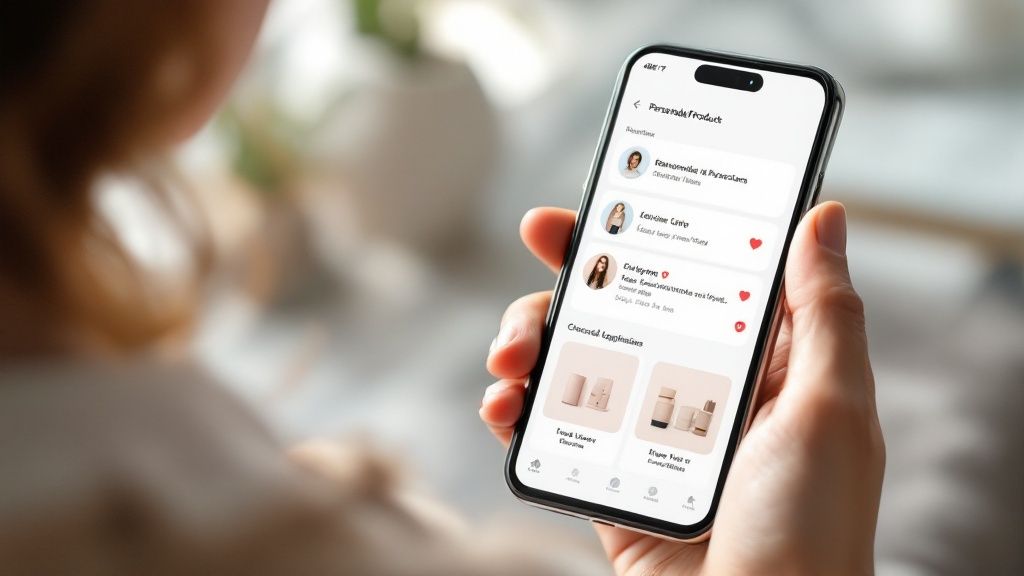
Let’s be real for a second: most loyalty programs are forgettable. They’re just another app collecting dust on a phone or a plastic card lost in a wallet. A poorly designed program is actually worse than having none at all—it makes your relationship feel purely transactional.
The trick is to make your program feel less like a chore and more like a rewarding journey. It’s about creating a sense of progress and belonging that goes way beyond the old "buy ten, get one free" punch card.
Move Beyond Simple Points Systems
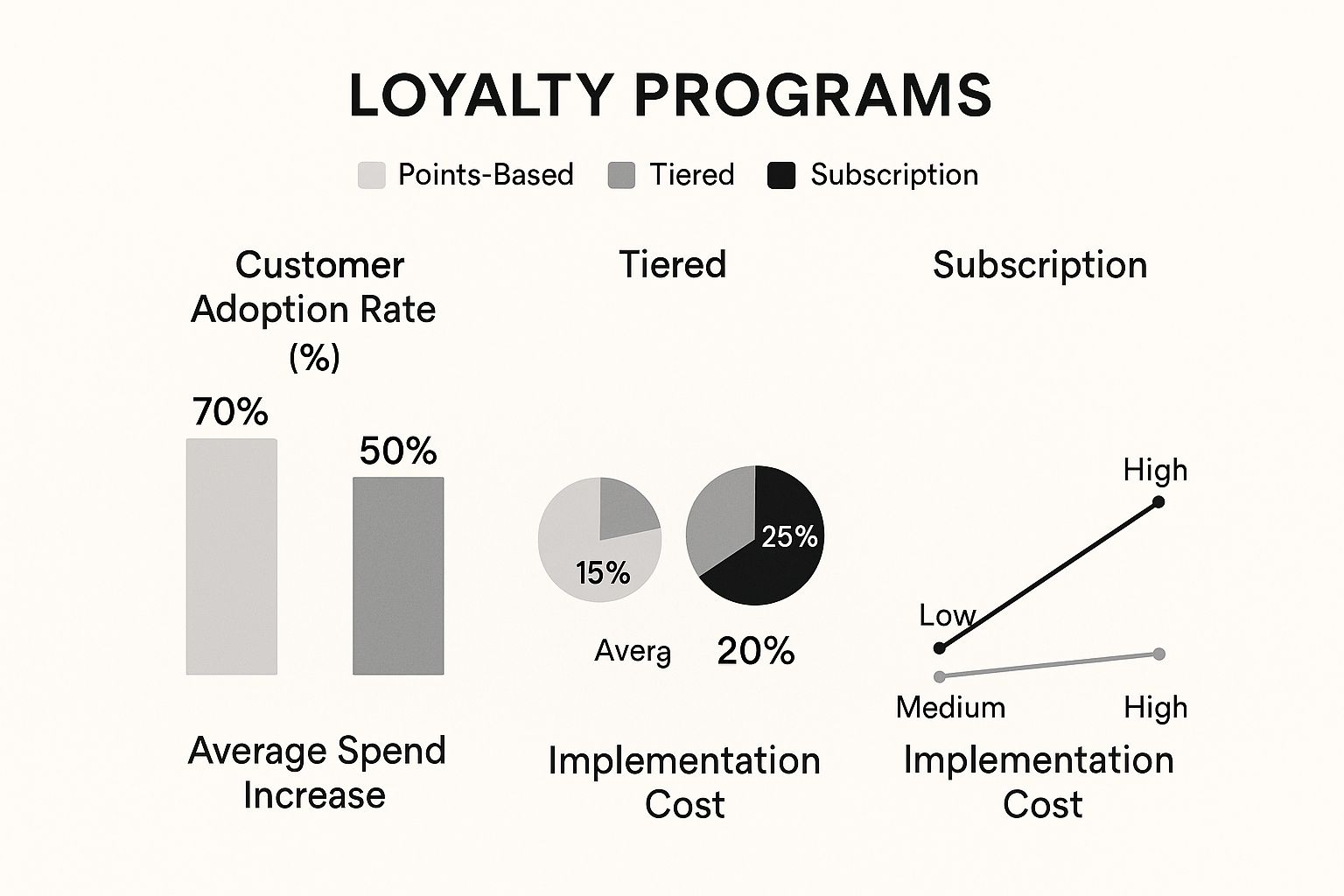
Points-based programs are everywhere, and that's exactly the problem. They rarely stand out. While they can work, customers today expect something more than just a simple discount for spending money.
It’s time to think bigger. Turn your program into something that feels exclusive and genuinely valuable.
- Tiered VIP Systems: Think Bronze, Silver, and Gold levels. Each tier should unlock better perks, giving customers a real reason to stick around and spend more. This plays right into our natural desire for status and achievement.
- Exclusive Access: Offer members-only content, early access to new product drops, or invites to special events. This isn't about saving a few bucks; it's about making them feel like a true insider.
- Surprise and Delight: Keep things interesting. Randomly send your best customers an unexpected gift or a personalized offer. That kind of spontaneity builds a much stronger emotional bond than a predictable discount.
These aren't just tricks; they’re strategies that build a protective moat around your business. You’re offering value that your competitors can't easily copy.
A great loyalty program should feel like a club people are genuinely excited to join, not just a system for collecting points. The best rewards are often the ones that make customers feel special and recognized.
Make Earning Rewards Engaging and Diverse
How customers earn rewards is just as important as what they earn. If the only way to get points is by making a purchase, the whole thing can feel like a slow, boring grind.
Instead, think about all the ways a customer brings value to your brand and reward them for those actions, too. This approach not only gets people more involved but gives them more reasons to interact with you day-to-day.
Consider giving out points or perks when customers:
- Write a product review
- Refer a friend to your business
- Follow you on social media
- Complete their user profile
- Celebrate a birthday or their anniversary with your brand
The data really backs this up. Programs giving customers an average of 5.5 ways to earn points see the highest engagement. That flexibility makes the program feel more achievable and, frankly, more fun. For more on this, check out the customer loyalty trends and predictions from comarch.com.
Measure What Truly Matters
Sure, redemption rate is a decent starting point, but it doesn't paint the full picture. To know if your loyalty program is really working, you have to see how it changes customer behavior over the long haul.
A successful program doesn't just give away freebies; it actively drives growth.
Focus on the metrics that are tied directly to your bottom line:
- Customer Lifetime Value (CLV): Are your loyalty members spending more over their entire relationship with you compared to non-members?
- Purchase Frequency: Are members buying from you more often?
- Average Order Value (AOV): Does the program encourage members to spend a little more each time they check out?
Tracking these deeper metrics gives you a clear picture of your program’s ROI. It allows you to make smart, data-driven decisions instead of just guessing. This is a critical piece of the puzzle when learning how to increase customer retention for good. When you see these numbers go up, you know you've built something that benefits both your customers and your company.
Build Trust with Proactive Video Support
Let’s be honest, traditional customer support is usually reactive. A customer runs into a problem, gets frustrated, and then has to reach out for help. What if you could flip that script entirely? You can build real, lasting loyalty by solving problems before they even become problems. This is where proactive video support shines.
Instead of getting bogged down in long emails or confusing chat transcripts, video brings a much-needed human touch to the table. A quick, personalized screen recording or a friendly video check-in can turn a routine interaction into a genuinely positive experience. That’s how you build the kind of trust that turns customers into your biggest fans.
Humanize Your Customer Onboarding
First impressions matter. A lot. A generic "welcome" email is okay, but a personalized welcome video? That’s something people remember. Imagine a new customer signs up and, within a few hours, gets a short video from a real person on your team.
This doesn't have to be a big production. A simple screen recording can do wonders. In it, you could:
- Greet them by name. This small gesture instantly makes the experience feel personal, not automated.
- Highlight a key feature you think they'll love, based on how they signed up.
- Show them exactly where to find help if they get stuck, which is incredibly reassuring.
This one simple act shows them you see a person, not just another user ID. It proves you're invested in their success right from the very beginning.
Solve Complex Problems Faster with Video
We've all been there—stuck in an endless email chain trying to explain a technical issue. It's frustrating for the customer and a huge time-sink for your support team. Text-based support just doesn't cut it for complex problems.
Video slices right through that confusion. With screen-sharing tools, an agent can whip up a quick, custom tutorial that visually walks the customer through the exact steps to fix their issue. This is a cornerstone of proactive customer service, as it anticipates where a user might get lost and gives them a clear path forward.
The real goal isn't just to close a ticket. It's to leave the customer feeling empowered and confident. A personalized video tutorial says, "We get it, and we're here to guide you," which builds incredible trust.
Embedding video into these familiar support channels transforms them from static communication lines into dynamic, effective problem-solving tools.
A Quick Comparison: Traditional vs. Video Support
When you're trying to build loyalty, the how of your support matters just as much as the what. Here’s a quick look at how video stacks up against more traditional methods.
Traditional vs Video Support for Building Loyalty
| Metric | Traditional Support (Email/Chat) | Video-Based Support |
|---|---|---|
| Personal Connection | Low. Often feels impersonal or automated. | High. Puts a human face to the company. |
| Clarity of Solution | Moderate. Can be lost in long text descriptions. | Very High. Visually shows exact steps. |
| Resolution Time | Can be slow due to back-and-forth communication. | Fast. Often resolves issues in a single interaction. |
| Customer Effort | High. Customer must describe the issue in detail. | Low. Customer can simply show the problem. |
| Memorable Experience | Low. Interactions are often forgettable. | High. A personalized video stands out. |
As you can see, video-based support creates a more personal, efficient, and memorable experience—all key ingredients for building deep, lasting customer loyalty.
Use Video for Proactive Check-Ins and Follow-Ups
Loyalty isn't just forged in a crisis; it's nurtured over time. Proactive video check-ins are a fantastic way to show customers you're thinking about them, even when they haven't asked for help.
For example, if you see a customer is starting to use an advanced feature, why not send them a short video with a pro-tip they might not know? Or, after you've solved a support ticket, a follow-up video a week later asking if everything is still working smoothly can make a massive impact.
These small, thoughtful gestures show that your relationship is more than just transactional. You’re not just a service provider; you're a partner in their success.
Fostering a Thriving Brand Community
The deepest, most durable customer loyalty isn't bought with discounts—it’s earned through a real sense of belonging. When customers feel like they're part of something bigger, their connection to your brand transforms. It’s no longer just about transactions; it’s about emotion. They shift from being simple consumers to becoming true advocates.
Building a brand community means creating spaces where your customers can connect, not just with your company, but with each other. This isn't about blasting marketing messages into an echo chamber. It's about starting genuine conversations and facilitating shared experiences that provide value well beyond the product itself.
Give Your Community a Place to Call Home
First things first, your community needs a home base. This should be a place where people feel comfortable sharing their thoughts, asking for help, and connecting with others who get it. The specific platform you choose is less important than the intention behind it.
You've got a few solid options:
- Exclusive Online Forums: Think of a private Slack channel, a Discord server, or a members-only area on your website. This approach creates a feeling of exclusivity and gives your most dedicated customers a direct line to both your team and their peers.
- Social Media Groups: A private Facebook or LinkedIn Group is a fantastic, low-effort way to gather your audience right where they already hang out. It’s perfect for sparking discussions and encouraging people to share their own content and stories.
- Regular Webinars or Workshops: Nothing creates a sense of shared experience like a live, interactive event. These are great opportunities for customers to learn together, ask questions on the fly, and feel like they’re part of a larger movement.
Purposefully creating these connection points is a huge part of designing a better customer experience. To get more ideas on identifying these critical moments, it helps to understand the fundamentals of customer experience journey mapping and how it shapes brand perception. When you build these dedicated spaces, you’re actively cultivating an environment where loyalty can truly take root.
Spark Conversations That Add Real Value
Just opening a forum and hoping for the best won't work. You have to actively nurture it. A healthy community needs a reason to show up day after day. Your job is to be less of a moderator and more of a host, sparking conversations that actually matter to your members.
Get the ball rolling by sharing valuable content. You could offer a behind-the-scenes peek at upcoming features, directly ask for feedback on new ideas, or even host an "Ask Me Anything" (AMA) with your lead developer. More importantly, encourage members to post their own wins and challenges.
A lively brand community turns your customer base from a quiet audience into your greatest source of innovation. Their feedback becomes your product roadmap, and their success stories become your most authentic marketing.
When a customer shares a clever way they're using your product, celebrate it! This not only gives that person a well-deserved shout-out but also inspires everyone else. This cycle of sharing and recognition is what keeps a community buzzing with energy and growing over time.
Empower Your Biggest Fans
In any community, you'll quickly notice a small group of "superusers" who rise to the top. These are the folks who jump in to answer other people's questions, share praise without being asked, and offer incredibly thoughtful feedback. They are your most valuable asset, and acknowledging their contribution is essential for building lasting loyalty.
Consider creating a program to empower these advocates, whether it's formal or informal. You could offer them things like:
- Early access to new products or beta versions.
- Exclusive swag or a special badge next to their name in the community.
- A direct line to your product team to share their insights.
When you elevate your most passionate customers, you give them a stronger sense of ownership and purpose. They effectively become an extension of your team, providing the kind of social proof and peer support that no marketing campaign can ever buy. This builds a powerful protective moat around your business that competitors will find almost impossible to cross.
Making Loyalty Part of Your Company’s DNA
When you get right down to it, customer loyalty isn’t the result of a single brilliant program or a fancy new tool. It’s about creating a culture where every single decision gets filtered through one question: "How does this affect our customer?" This is how all the pieces, from video support to community forums, lock together to build something truly lasting.
Loyalty is what happens when a company is genuinely obsessed with its customers. It's when your product team hunts for user feedback to solve real-world problems, not just to pad a feature list. It's when your marketing crew crafts stories that actually connect with people instead of just chasing vanity metrics.
It's a Mindset, Not a Project
The brands that people stick with for life don't see loyalty as a task to be checked off. They bake it into their core operations. This means everyone, from the CEO down to the newest support agent, is empowered to do what's right for the customer relationship.
Making this shift stick requires real, consistent effort. It's not a one-and-done deal.
- Shout out customer wins. When you get great feedback or a customer success story, blast it across every department's Slack channel. Make it a big deal.
- Invest in your people. Give your teams the training and, more importantly, the freedom to deliver amazing service without constantly needing a manager's approval.
- Rethink your rewards. Are you only rewarding sales? Start incentivizing actions that boost customer satisfaction and keep people coming back.
A loyal following is built on a thousand small, thoughtful actions, repeated day in and day out. It all comes from believing that your success is completely tied to the success of the people you serve.
When your entire company gets behind this idea, loyalty stops being a strategy and just becomes who you are. It’s about making genuine connections and proving your value over and over again, turning everyday customers into your biggest fans.
A Few Common Questions, Answered
As you start putting these loyalty strategies into practice, a few questions always seem to come up. Let’s tackle some of the most common ones I hear from business owners.
How Do I Actually Measure the ROI of My Loyalty Efforts?
It’s easy to feel like you’re doing good work, but how do you prove it? The key is to connect your loyalty initiatives to real business numbers.
Start with Customer Lifetime Value (CLV). If your loyal customers are spending more with you over time, your CLV for that group should be climbing. That’s a huge win.
Also, keep a close eye on your churn rate. A drop in the number of customers leaving is one of the clearest signs that your efforts are paying off. Finally, track your Net Promoter Score (NPS) to see if you're creating more advocates. When these metrics move in the right direction, you can clearly link your loyalty work to higher revenue and lower acquisition costs.
What’s the Real Difference Between Loyalty and Satisfaction?
This is a big one. Think of it this way: customer satisfaction is temporary. It’s about a single, positive experience. A customer can be satisfied with a purchase today and still jump to a competitor tomorrow for a better deal.
Loyalty, on the other hand, is a deep, long-term emotional connection. A loyal customer will stick with you even if you make a small mistake. They'll choose you over a cheaper alternative and even recommend you to their friends.
Satisfaction is about a transaction; loyalty is about a relationship. One is a fleeting reaction, while the other is a lasting bond built on trust and consistent value.
Can a Small Business Build Loyalty Without a Huge Budget?
Absolutely. In fact, small businesses have an advantage here: they can be incredibly personal in a way big corporations just can't. You don't need a massive budget to make people feel seen and valued.
Here are a few powerful, low-cost ideas that work wonders:
- Remember people's names. It’s simple, but it matters.
- Send a handwritten thank-you note after a big purchase. It stands out in a digital world.
- Jump on social media and engage with people personally and authentically.
- Grab your phone and record a quick, personalized welcome video for a new customer.
These small, human touches are what build real connections. You can't buy that kind of authenticity, and it often creates the strongest, most lasting loyalty.
Ready to build unbreakable customer trust with a personal touch? With Screendesk, you can humanize your support using personalized screen recordings and seamless live video calls, turning every interaction into a loyalty-building opportunity. Learn how you can transform your customer service at https://screendesk.io.
