


Think of an automatic bug screen as a garage door, but for your patio. Instead of blocking cars, it's designed to keep insects out. With just the push of a button, a motorized screen lowers to seal off your outdoor space, giving you an instantly comfortable, bug-free zone.
What Is an Automatic Bug Screen Anyway?
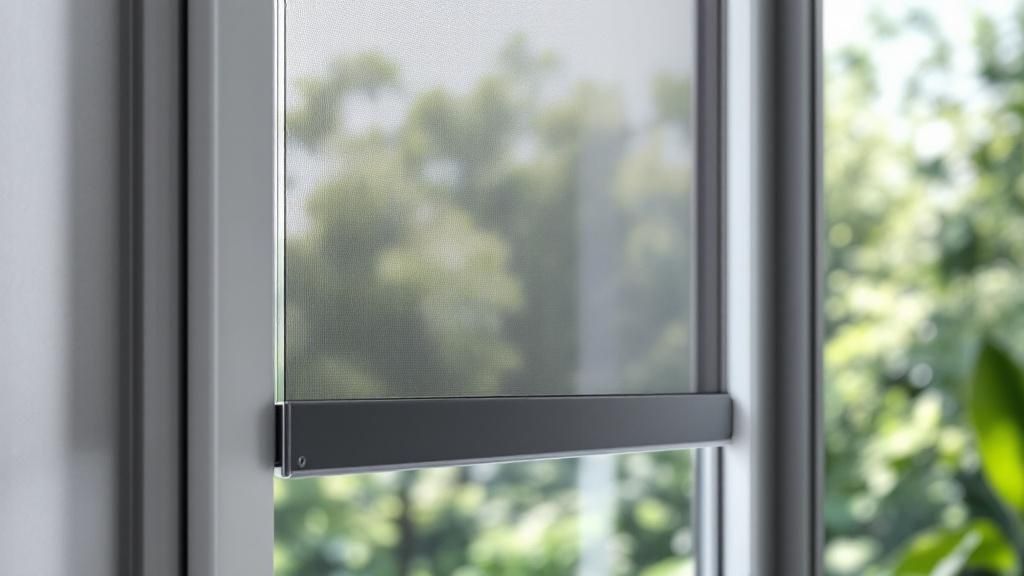
At its heart, an automatic bug screen is a smart system that gives you the best of both worlds—convenience and comfort. It can transform almost any outdoor area—like a porch, patio, or even a garage—into a flexible indoor-outdoor living space. This means you get to enjoy the fresh air and beautiful views without having to deal with pesky mosquitoes, flies, and other bugs.
Forget about struggling with old-school manual screens or being stuck with permanent fixtures that ruin your view all year. These motorized systems are all about flexibility. When you want a completely open space, the screen stays rolled up and hidden away in its housing. The moment pests start to show up, a simple press of a button brings it down.
The Core Components Explained
It's actually pretty simple to understand how these systems work once you look at the three main parts. Each one has a specific job that contributes to that seamless, on-demand experience.
-
The Screen Mesh: This is a far cry from the flimsy mesh on a standard window screen. It's a tough, high-tensile material, usually made from vinyl-coated fiberglass or polyester. It’s built to handle the weather while still giving you a crystal-clear view.
-
The Motorized Roller: A quiet, powerful motor sits inside a sleek aluminum housing. It works just like a high-end projector screen, smoothly and silently rolling the screen up or down when you command it.
-
The Controls and Tracks: You can operate the screen with a remote, a wall switch, or even sync it with your smart home system. The screen glides along discreet vertical tracks, creating a tight seal on all sides that effectively locks out any unwanted critters.
This combination of smart technology and practical design is making a big splash. The global insect screen market was valued at USD 789.40 million in 2024 and is expected to grow to USD 1.18 billion by 2032. This boom is driven by people wanting healthier, more comfortable living spaces. You can see more details on this trend in the market research from Data Bridge.
How These Motorized Screens Actually Work
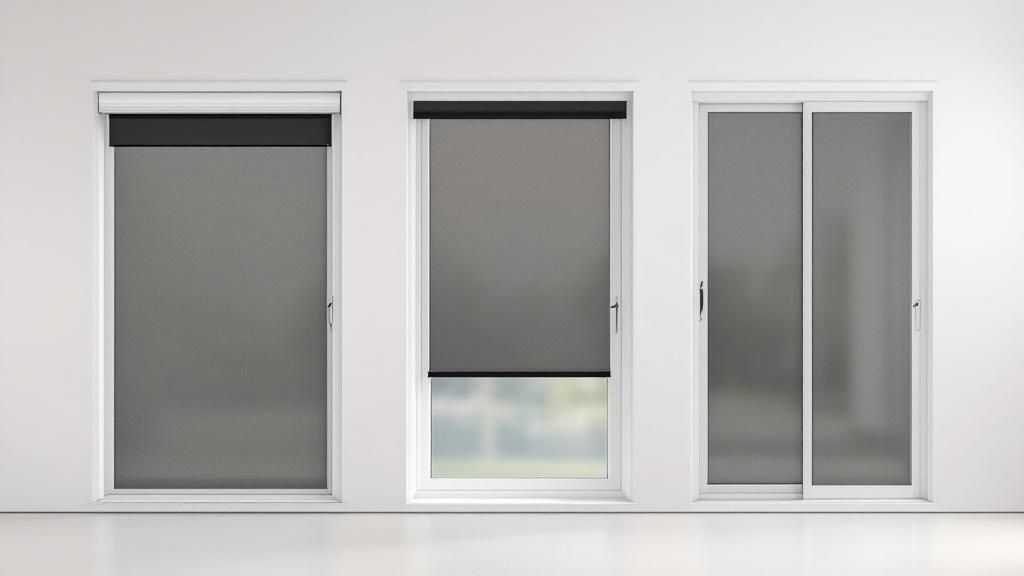
So, how do these screens actually operate? At the heart of it all is the motorized roller. The best way to picture it is like a very sophisticated, heavy-duty version of a self-rolling window shade, except it’s engineered to withstand the elements outside.
This roller holds the screen mesh and is tucked away inside a sleek aluminum housing. This casing is a huge deal—it protects the screen from sun, rain, and dirt when it’s rolled up, which is a big reason these systems last so much longer than old-school fixed screens. When you hit the button, a quiet motor unrolls or retracts the screen, changing your outdoor area in just a few seconds.
The Brains Behind the Operation
A motor is only as good as the commands it receives, and that’s where the control systems come in. The beauty of these screens is that you can choose how you want to operate them, from dead simple to fully automated.
- Simple Controls: Most units come with a basic handheld remote or a wall switch. It’s straightforward, reliable, and gives you instant control with a single touch.
- Smart Integration: If you're into a more connected home, these screens can often be linked to your smart home setup. This means you can use voice commands with Alexa or Google Home, or just pull out your smartphone and control them from an app.
Imagine you're enjoying a beautiful sunset when the mosquitoes start their evening patrol. Instead of getting up, you simply tap a button on your phone, and the screen silently lowers to create a bug-free oasis without disturbing the moment.
The real secret weapon, though, is the side track system. These are the vertical guides installed on both sides of the opening. As the screen comes down, its edges slide neatly into these tracks, creating a perfect seal. This is what stops pesky insects from finding a way in—no gaps, no exceptions. The technology is similar in principle to other automated home features, like automatic skylight openers, which also rely on precise motor control.
It’s this combination—the motor, the controls, and the tracks—that delivers such effective, on-demand protection.
What This Actually Means for Your Home
It’s one thing to talk about motors and tracks, but the real magic of an automatic bug screen is how it changes the way you live. This isn't just another home improvement project; it's an upgrade to your lifestyle, comfort, and even your health. The benefits are real, and you feel them right away.
The most immediate win? Effortless comfort. Picture this: you're enjoying dinner on the patio as the sun sets, but you don't have to swat away a single mosquito. With just the push of a button, you can seal off your space. You get all the fresh air without any of the pests. Suddenly, that patio you could only use for a few hours a day becomes your favorite spot to relax or entertain.
More Than Just Convenience
Beyond keeping bugs at bay, these screens offer some serious perks for your health and your wallet. They act as a physical shield against insects that can carry diseases, giving you peace of mind.
-
A Healthier Environment: An automatic bug screen is a simple, effective barrier against mosquitoes, flies, and other pests. This is especially important if you have kids or pets, creating a safer space for them to play outside.
-
Boost Your Home's Value: A motorized screen is a modern, high-end feature that really makes a property stand out. It tells potential buyers that your home is well-cared-for and upgraded, which can be a huge advantage when it's time to sell.
-
A Smart Move for Businesses: If you own a restaurant or café, enclosing your patio with an automatic screen can be a game-changer. You can instantly expand your seating and protect customers from bugs, boosting your revenue whenever the weather is nice.
This focus on creating healthier, more usable spaces is why the market is growing so quickly. In Europe alone, the insect screen market was valued at USD 285.4 million in 2024 and is expected to climb to USD 480 million by 2035. This growth is all about people wanting to live better and find smarter, chemical-free ways to deal with pests. You can dig into the numbers in the latest research report on the insect screen market.
An automatic bug screen turns your outdoor area into a versatile extension of your home. It’s no longer just a patio; it’s a dining room, a playroom, or a quiet reading nook, available on demand.
Of course, these screens are perfect for big openings like patios and porches. But a truly pest-proof home means looking at the small entry points, too. If you want to take a more complete approach, this a homeowner's guide to mesh air brick covers is a great resource. In a similar vein, just as it's important to see the whole picture with home protection, understanding every user interaction is vital in customer support. For a look at how to get that full view in a different context, check out our guide explaining what is cobrowsing.
Automatic Screens vs. Manual Screens
When you're looking to screen in a patio, garage, or porch, your choice usually boils down to two paths: a modern automatic system or a traditional manual screen. Both get the job done when it comes to keeping bugs out, but that’s where the similarities end. They offer completely different experiences in convenience, looks, and how well they hold up over time. Figuring out these differences is the key to picking the right one for your home.
The biggest, most obvious difference is how you use them. A manual screen, whether it's a simple sliding door or a fixed panel, needs you to physically do the work—sliding, pulling, or setting it in place. On the other hand, an automatic bug screen works with a simple press of a button, disappearing completely out of sight when you don’t need it.
This quick visual breaks down the simple, three-step process that makes an automatic screen so easy to live with.
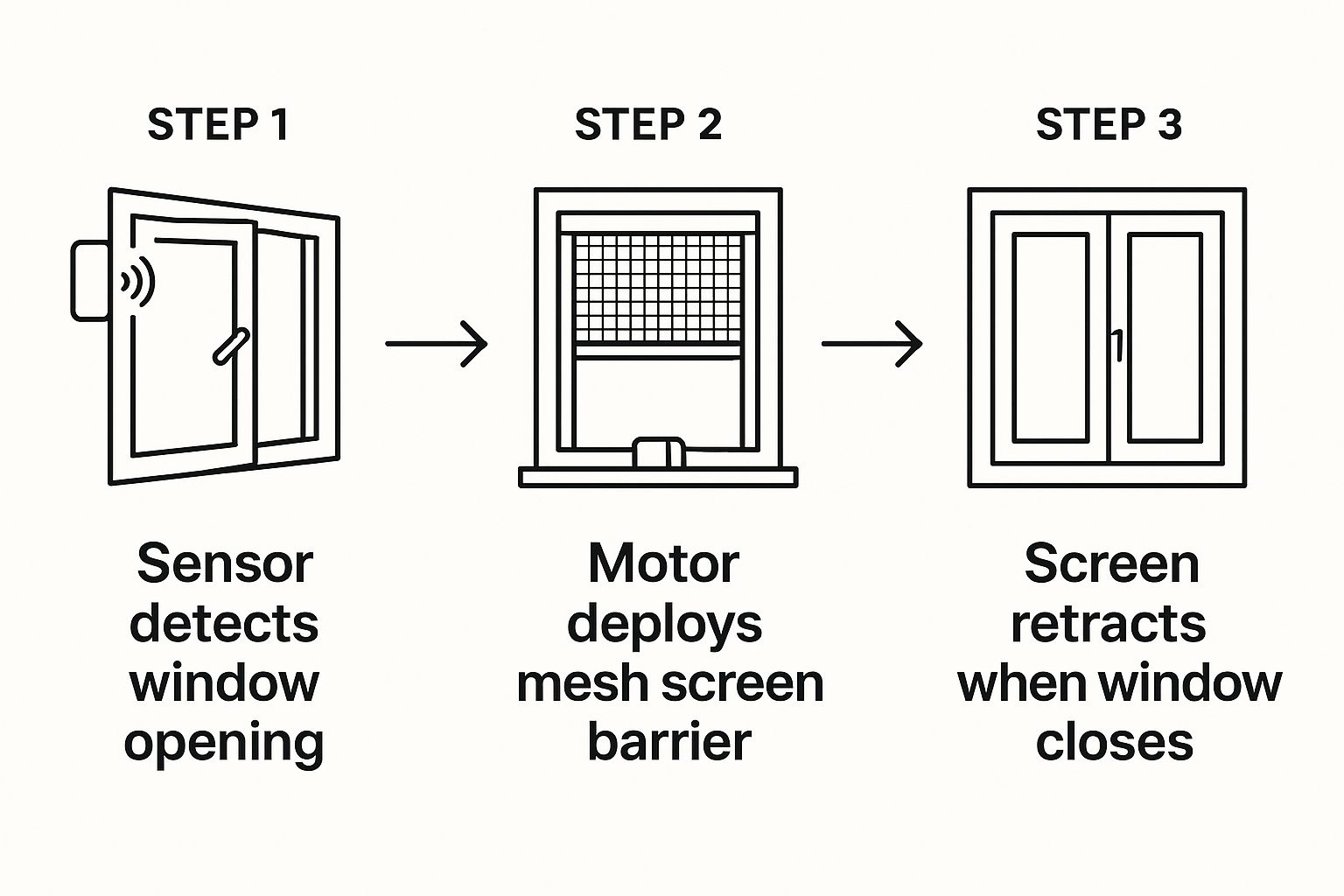
As you can see, the whole system is designed to be hands-off. It just works, moving from one step to the next without you having to lift a finger.
A Head-to-Head Comparison
To really understand the trade-offs, it helps to see the two options side-by-side. While a manual screen might seem like the budget-friendly choice at first glance, the day-to-day reality can be quite different.
Here’s a breakdown of how they stack up:
Automatic vs Manual Bug Screen Comparison
| Feature | Automatic Bug Screen | Manual Bug Screen |
|---|---|---|
| Operation | Push-button control; completely effortless | Requires physical effort to open, close, or install |
| Convenience | High; retracts instantly and disappears from view | Low; can be cumbersome, especially for large openings |
| Durability | Excellent; retracts into a protective housing, shielding it from weather and damage | Fair to Poor; constantly exposed to sun, rain, and physical wear |
| Aesthetics | Clean and modern; preserves unobstructed views when not in use | Can obstruct views and may look bulky or dated |
| Initial Cost | Higher upfront investment | Lower initial cost |
| Long-Term Value | High; adds to home value and has a longer lifespan | Lower; may need frequent repairs or replacement |
As the table shows, the higher initial cost of an automatic system often pays for itself in convenience and longevity.
While manual screens definitely have a lower price tag upfront, the advantages of an automatic system often make the investment worth it. The ability to retract the screen into its own protective housing is a huge deal for durability. This feature protects the delicate mesh from harsh sun, pounding rain, and accidental damage, which can seriously extend its life compared to a manual screen that's always out in the elements.
An automatic screen isn’t just a barrier; it's a dynamic part of your home's design. It preserves your view completely when retracted and provides instant protection when deployed, offering a level of flexibility that fixed screens can't match.
In some cases, going with an automatic screen is a no-brainer.
- Large Openings: Got a huge patio opening or a two-car garage? A motorized system is way more practical than wrangling a giant, clumsy manual screen.
- Convenience is Key: If you just want things to be easy and look good, the push-button simplicity and clean, modern appearance of an automatic system is the clear winner.
- Enhanced Home Value: A motorized screen is a premium upgrade. It boosts curb appeal and adds a touch of class that can be a real selling point down the road.
Where Can You Use an Automatic Bug Screen?
The real magic of an automatic bug screen happens when you see it in action. These systems are incredibly versatile, making all sorts of spaces more comfortable and useful. Let's look at a few real-world situations where they solve some very common frustrations.
Imagine a family that loves to hang out on their patio on warm summer evenings. But every night, like clockwork, the mosquitoes and gnats show up and chase everyone inside. By adding a motorized screen, they can turn that buggy patio into a proper indoor-outdoor living room. With just the push of a button, they can seal off the space for a pest-free dinner or retract it completely to enjoy the open air.
From Backyards to Businesses
This isn't just a solution for backyards. Think about your favorite local cafe with that great terrace seating. It’s packed during the day, but once the bugs come out, it’s a ghost town. By enclosing that terrace with automatic screens, the cafe can keep its customers comfortable and nearly double its seating on warm nights, which is a direct boost to their bottom line. If you're looking for other ways to win the war against pests, you can find some great tips for keeping flies away outside.
An automatic bug screen is more than just a barrier—it's a way to reclaim and expand your space. It gives you the power to adapt to the moment, maximizing both comfort and usability.
Even industrial environments get a major upgrade. Take a loading dock, for instance. A heavy-duty automatic screen can keep the air flowing for employees without letting pests wander inside, which is a huge deal for both hygiene and safety. This kind of flexibility is fueling serious growth. The vibrating screen market, which includes these industrial pest control systems, was valued at USD 2.53 billion in 2025 and is expected to hit USD 5.28 billion by 2035. You can discover more insights about this industrial trend.
These different examples all point to the same thing: the core strength of an automatic bug screen is its adaptability. Speaking of tackling issues, for a more technical look at documenting problems, you might find our library of bug report templates helpful. It's this focus on solving real, practical problems that makes these screens such a smart addition for homes and businesses.
Common Questions About Automatic Bug Screens
It makes perfect sense to have questions before you invest in a motorized screen for your home. You're thinking about how it will hold up over time, what installation looks like, and how it will fit into your daily life. Getting these details straight is what helps you make a great choice.
Let's dive into the questions we hear most often.
One of the biggest concerns is always durability. You'll be happy to know that high-quality automatic screens are built to last. The screen material itself is usually a tough, vinyl-coated fiberglass that's made to resist tearing. The housing and tracks that hold everything together are typically powder-coated aluminum, which means they won't rust or corrode.
The real secret to their longevity is the retractable design. Because the screen rolls up into a protective housing, it’s safe from baking in the sun, getting caked with dirt, or taking a hit from a stray soccer ball. This one feature alone gives it a much longer life than a standard fixed screen that’s always exposed to the elements.
This smart design means your screen will keep working well and looking good for many years.
Practical Answers for Homeowners
Beyond simple durability, most homeowners want to know about the nitty-gritty of installation and what happens in unusual situations. Here are some straightforward answers to put your mind at ease.
-
Can they be installed anywhere? Pretty much! These systems are incredibly versatile and are custom-built to fit your space. They work just as well for massive patio openings as they do for garage doors or a wide bank of windows. A professional installer will take exact measurements to guarantee a perfect, bug-proof seal.
-
What happens if the power goes out? This is a great question. Most systems come with a manual override, which is usually a simple hand crank. It lets you raise or lower the screen easily, no electricity needed. Some higher-end models even offer a battery backup system for totally uninterrupted convenience.
-
Is maintenance a hassle? Not at all. Keeping them in great shape is surprisingly simple. A quick wash with mild soap and water a couple of times a year is all you need to do. Just make sure to keep the tracks clear of leaves or other debris, and it will continue to run smoothly.
Just as a good automatic bug screen solves a physical problem, the right tools can solve digital ones. To learn more about smoothing out your digital workflows, check out our guide on bug reporting best practices.
Ready to see how video can eliminate frustrating support back-and-forths? With Screendesk, you can resolve issues faster using instant screen recordings and live video support, directly from your helpdesk. Start your free trial today at Screendesk.io and transform your customer support.
